
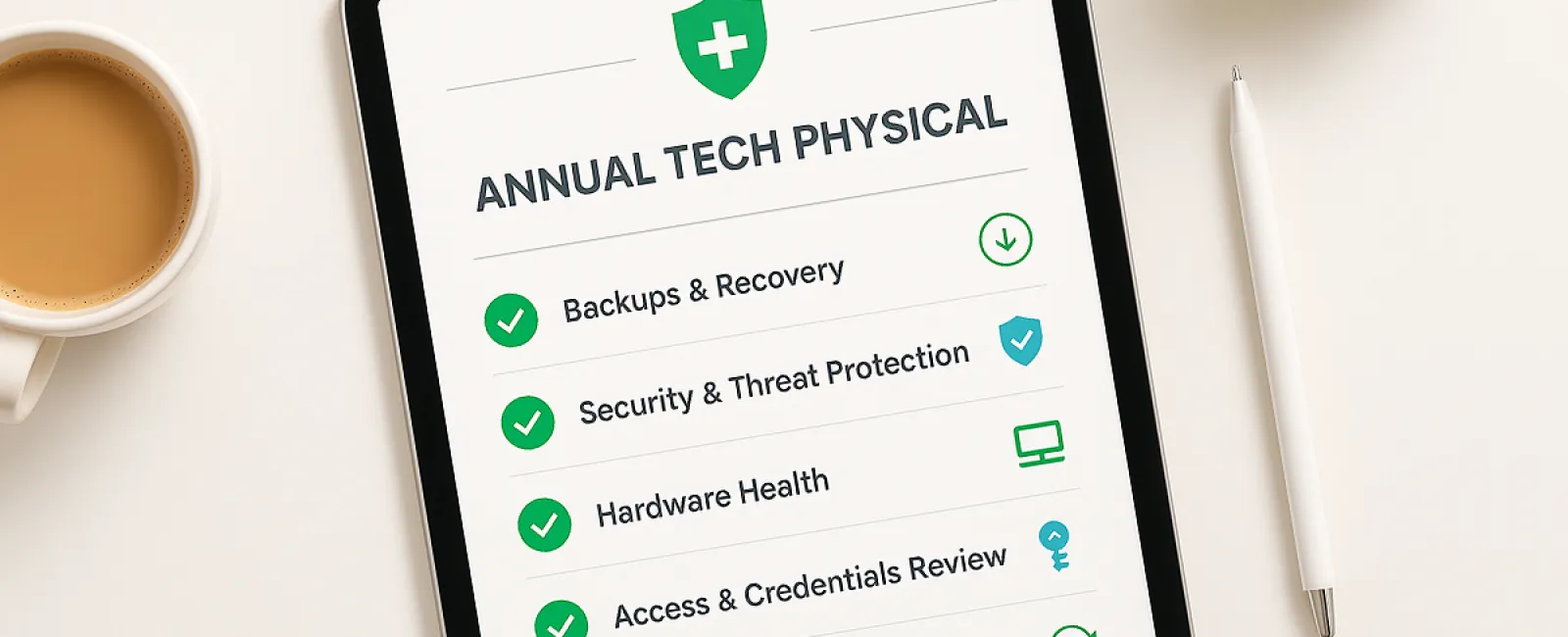
January marks the perfect opportunity to handle all those postponed appointments—doctor, dentist, or even that unusual car noise finally getting checked.
While preventive care might seem dull, it's certainly less frustrating than facing unexpected disasters.
So let's confront the tough question:
When was the last time your business technology underwent a thorough health check?
Not just fixing a printer last week—an in-depth, comprehensive system examination.
Because there's a huge difference between technology that merely functions and technology that's truly healthy.
Beware the "I Feel Fine" Illusion
Just like people avoid physical exams when they don't feel pain, many businesses skip tech assessments for similar reasons:
"Everything seems to be running fine."
"We're too busy right now."
"We'll handle issues when they appear."
Yet, tech problems seldom announce themselves ahead of time.
Just like high blood pressure or hidden cavities can silently cause damage, your technology can be deteriorating without any obvious signs—until catastrophe strikes.
Frequently, the downfall of small businesses comes down to:
- Known vulnerabilities left unaddressed
- Outdated hardware that suddenly fails
- Backups that exist on paper but won't restore
- Unauthorized or forgotten access accounts
- Overlooked compliance gaps that risk penalties
A system might operate daily yet be only one issue away from a major breakdown.
What Constitutes a Genuine Tech Health Check
A thorough technology assessment mirrors a doctor's examination—methodically uncovering hidden risks before they evolve into emergencies.
Critical Metrics: Backup and Recovery Health
Your backups are the lifeline of your tech systems. If disaster strikes, can you bounce back?
• Are backups completing successfully, not just scheduled?
• When was the last time you tested a data restore by retrieving and verifying files?
• In case of a server failure at 9 a.m. Monday, how soon could you resume normal operations? Do you have a clear answer?
Many businesses discover backup failures only during crises—much like finding out airbags are faulty during a serious collision.
Core Health: Hardware and Infrastructure Status
Hardware doesn't fail with warnings. It deteriorates silently, support ends, performance slows, until sudden breakdowns cause costly downtime.
- What's the age of your vital equipment—servers, firewalls, workstations?
- Are any devices no longer supported by manufacturers—meaning no security updates, patches, or technical help?
- Are you proactively replacing hardware, or relying on equipment until it unexpectedly fails?
Neglecting aging hardware is one of the primary reasons businesses face unexpected operational halts.
Security Check: Access Controls and Credentials
Do you know exactly who has access to what within your organization? If your answer is uncertain, it's definitely time for a review.
- Can you provide a comprehensive list of current system access holders?
- Are there former employees or vendors still holding active accounts?
- Do you have shared accounts where accountability is unclear?
Access creep is a common vulnerability—not due to negligence but often from lack of time to maintain security hygiene.
Disaster Simulation: Readiness for Worst-Case Scenarios
Thinking about the worst isn't fun, but failing to prepare is far worse.
- If ransomware struck tomorrow, do you have a tested, actionable response plan?
- Is the plan documented and understood by your team?
- How long could your business continue functioning without critical systems?
Relying on "we'll figure it out" is no plan—it's a gamble.
Industry Compliance: Tailored Checks and Regulations
Every industry has specific standards that define "healthy" technology compliance.
- Healthcare providers must adhere to HIPAA to avoid costly violations.
- Businesses handling credit cards need PCI compliance to keep processing payments.
- Client contracts increasingly demand strict security protocols—failing these can jeopardize partnerships.
You deserve IT guidance tailored to your regulatory landscape, not one-size-fits-all advice.
Indicators That Your Tech Checkup Is Overdue
If any of these resonate, it's time to act:
"I think our backups are working." (You're guessing?)
"Our server is old but still operational." (Like a car right before a major breakdown.)
"We probably have ex-employees still in the system." (Probably is risky.)
"We have a disaster plan… somewhere." (If you can't access it quickly, it might as well not exist.)
"If [name] left, we'd be in trouble." (Relying on a single person is an accident waiting to happen.)
"We'd likely fail an audit if one occurred." (Don't wait for the audit.)
The True Cost of Neglecting Tech Maintenance
A routine tech check might take hours; a failure can cost days, weeks, or even the entire business.
Data loss: Failing backups during server failure can destroy crucial business records—some companies never recover.
Downtime: Every hour offline means lost revenue, reduced productivity, and eroded client trust.
Compliance fines: Healthcare breaches can trigger $50,000 penalties; PCI failures risk payment processing; new privacy laws add increasing liabilities.
Ransomware attacks: The average recovery expense for small businesses can exceed hundreds of thousands, including ransom payments, recovery costs, business interruption, and reputational damage.
Prevention is affordable but unexciting. Recovery is costly and devastating.
Why You Need an Expert Health Check, Not a Self-Assessment
You wouldn't measure your own blood pressure and diagnose yourself. You rely on professionals with the right tools, experience, and perspective.
Technology evaluation is no different.
You need a specialist who:
- Understands your business size and industry-specific standards, not just generic guidelines.
- Recognizes common issues and early warning signs from years of experience with similar companies.
- Offers fresh eyes on your systems to identify problems you've become blind to over time.
This approach is proactive fire prevention—not reactive firefighting.
Book Your Comprehensive Tech Health Assessment Today
January is the perfect time to schedule your proactive technology checkup.
Schedule an Annual Tech Physical with us, where we evaluate your setup and deliver an easy-to-understand health report outlining strengths, risks, and areas needing attention before emergency strikes.
No technical jargon. No sales pressure. Just clear, actionable insights.
Click here or give us a call at (321) 221-2991 to book your Consult.
The best moment to tackle potential tech issues is before they escalate. That moment is now.


